1. Build the idea
Start with a game, then make the world their own.

Homeschool coding for ages 6–12
They build games. They learn real code.
You get project work they want to finish.
Events, choices, loops and variables—inside a game they imagined and made themselves.
No email needed. Nothing to install.
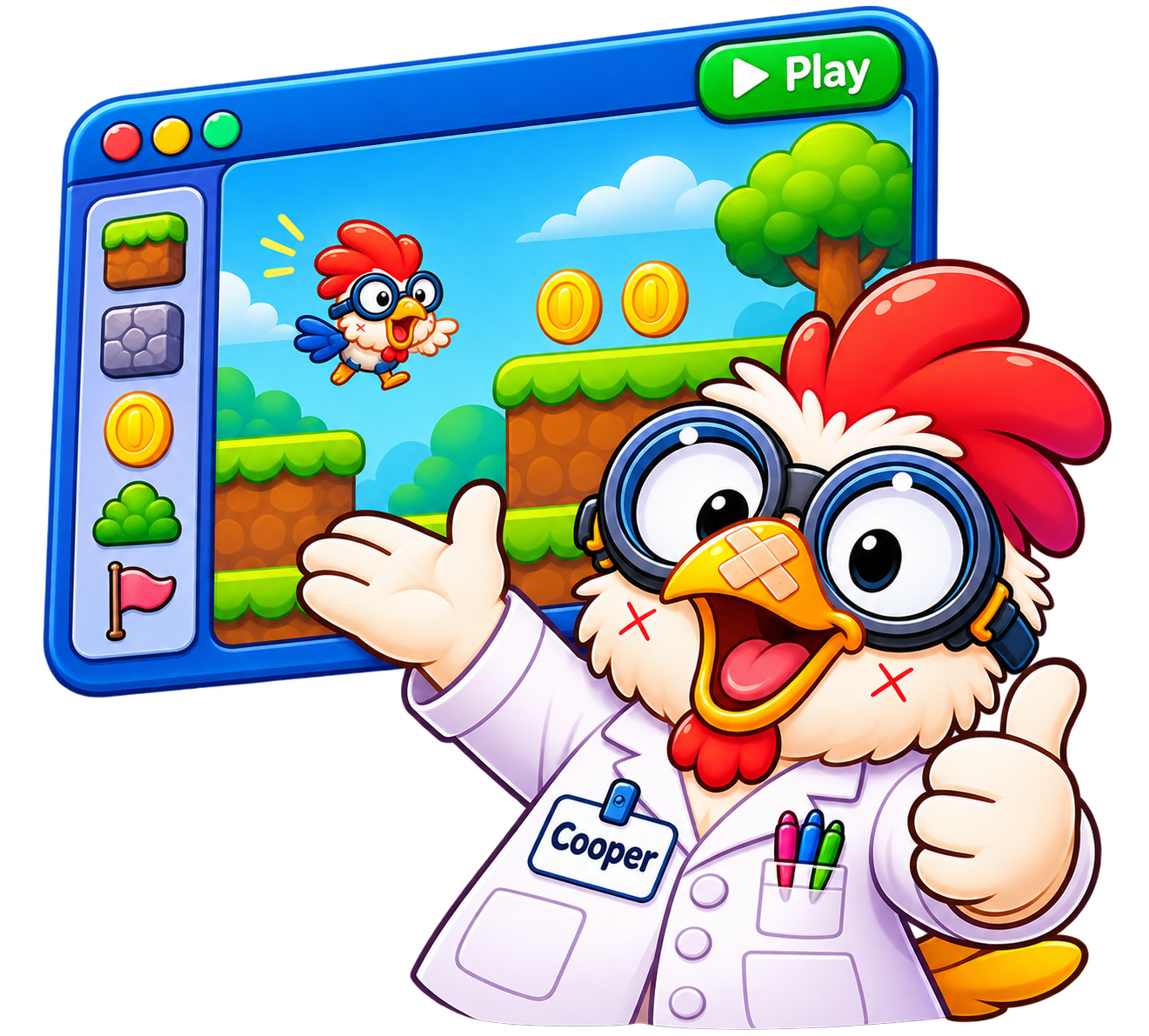
Build it, write the rules, then press Play and see what changed.
Start with a game, then make the world their own.
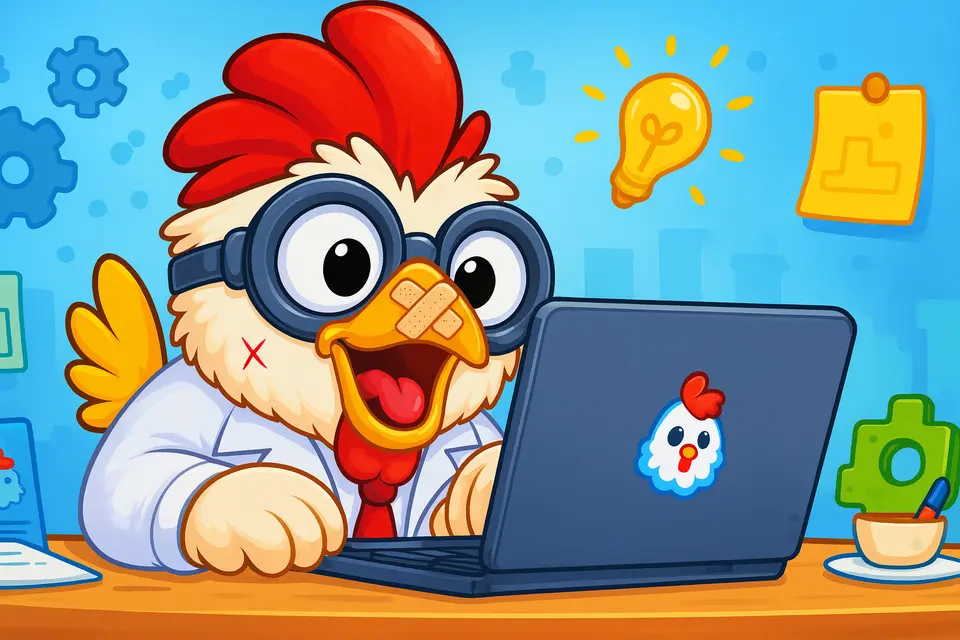
Use blocks or type Splat Script in plain words.
Press Play and see right away what the code changed.
Free courses that teach one small step at a time.

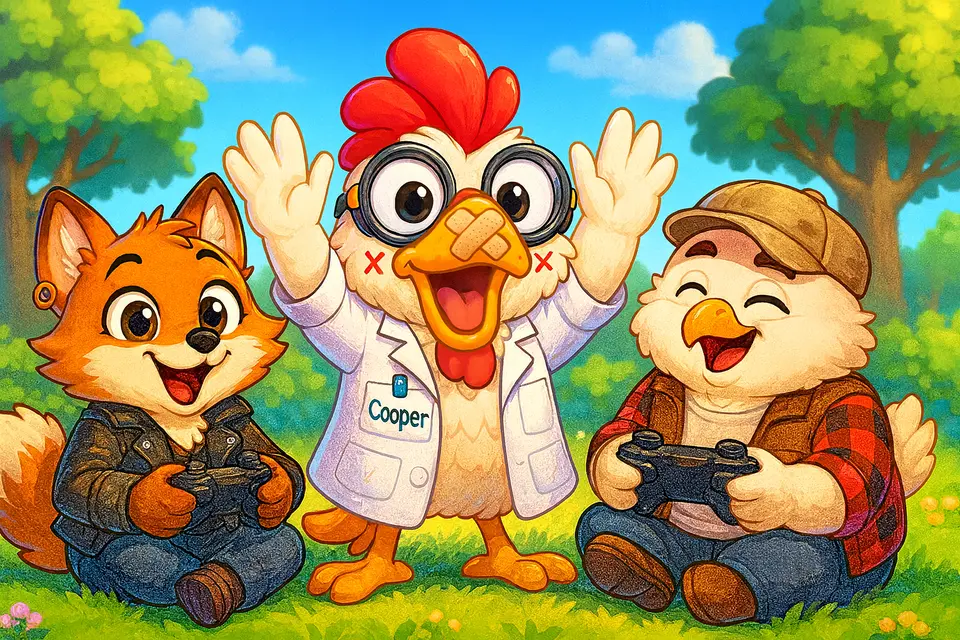
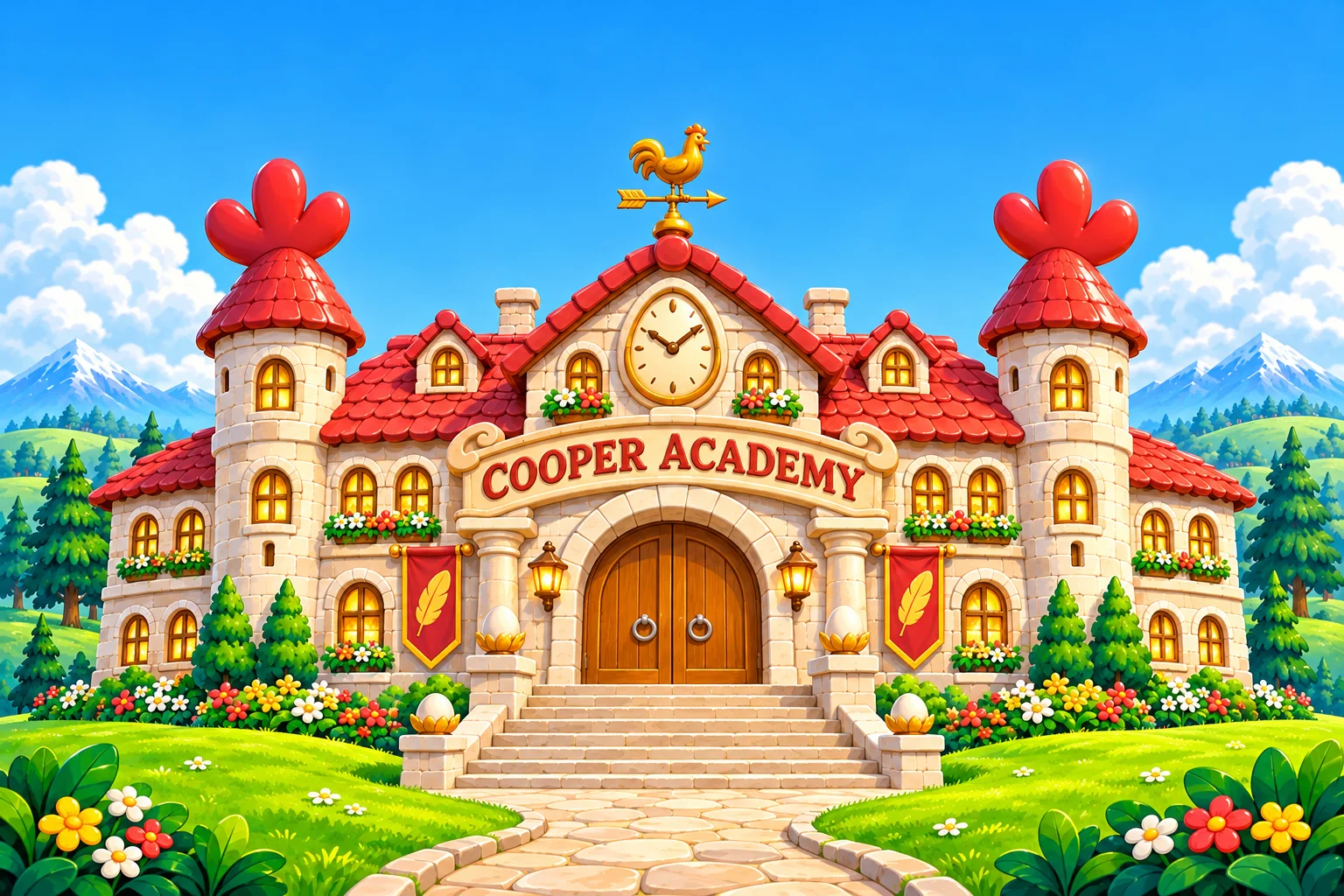
Cooper Academy is where kids take courses inside Splat Labs. Each course is split into chapters of short sections: a little reading, a video, a quiz, or a challenge to solve in a real game. Every course is free.
Coding. Kids learn to code with Splat Script, a language of plain words. They start by making a slime walk, then build their own Platformer with a boss, or an Adventure with a story and a quest.
Art and design. They draw pixel art, make it move with frames, and put it in their games. They design levels, pick a biome and music, and decide how their game should feel to play.
Computer skills. They learn to type with all ten fingers, one row at a time, by playing typing games. Along the way they use real tools: menus, settings, saving, and testing their work.
Each section gets a tick when it is done. A quiz explains any wrong answer. A challenge checks the child’s game and ticks off each goal as they reach it. A finished course gives a certificate to print.
The progress page shows how far each child has got, with notes for each chapter.
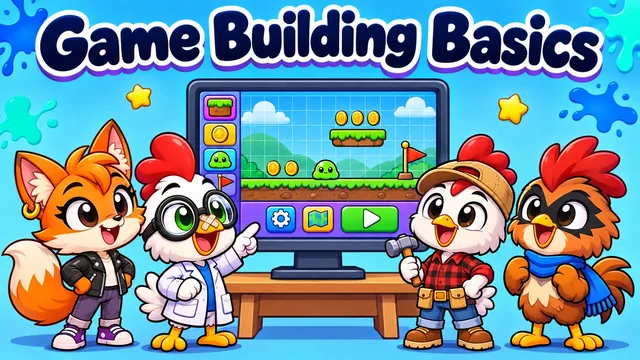 Game Building BasicsThe game builder, one button at a time. Kids build their own Platformer as they go.
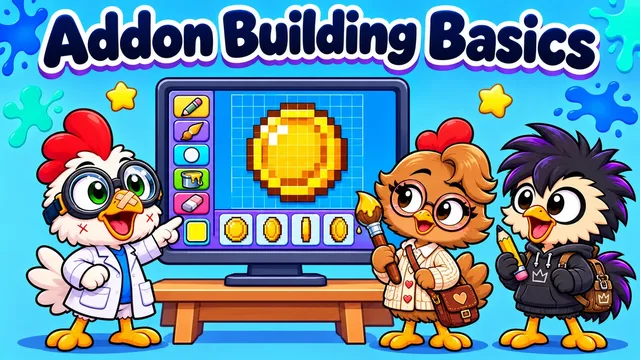 Addon Building BasicsDraw a pixel-art coin, make it spin with frames, and put it in a game.
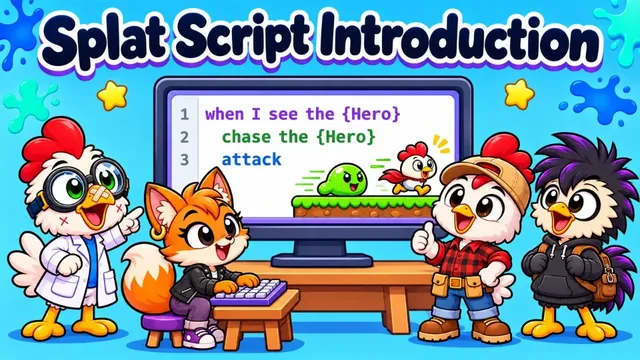 Splat Script IntroductionLearn to code by making games, from a slime that walks to a three-level Platformer with a boss.
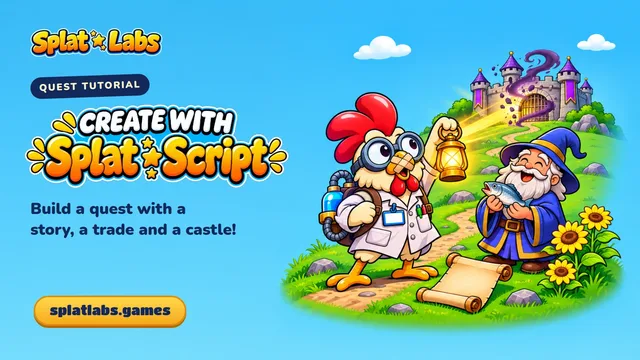 Creating a Quest using Splat ScriptBuild a four-world Adventure with a story, a hard bargain, a spell and a friend to rescue.
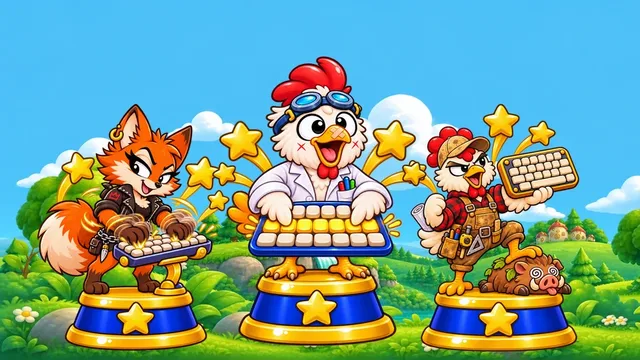 Type with CooperType with all ten fingers, one row at a time, by playing games. Needs a real keyboard.
Kids can also play the typing games without a course. They pick a game, then a level. The level decides the keys, from the home row up to capitals and full stops. Each level keeps their best speed, and the game slows down or speeds up to match them.
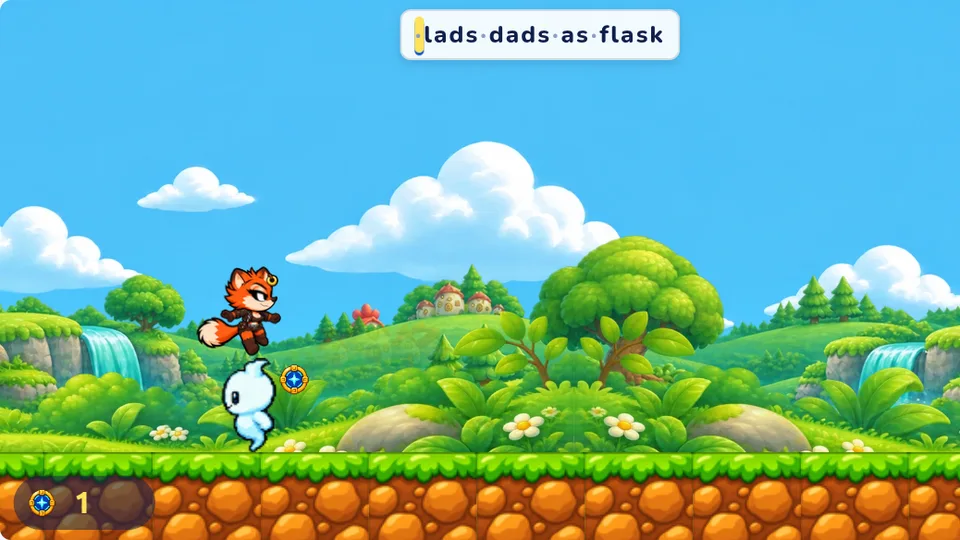 Endless runner
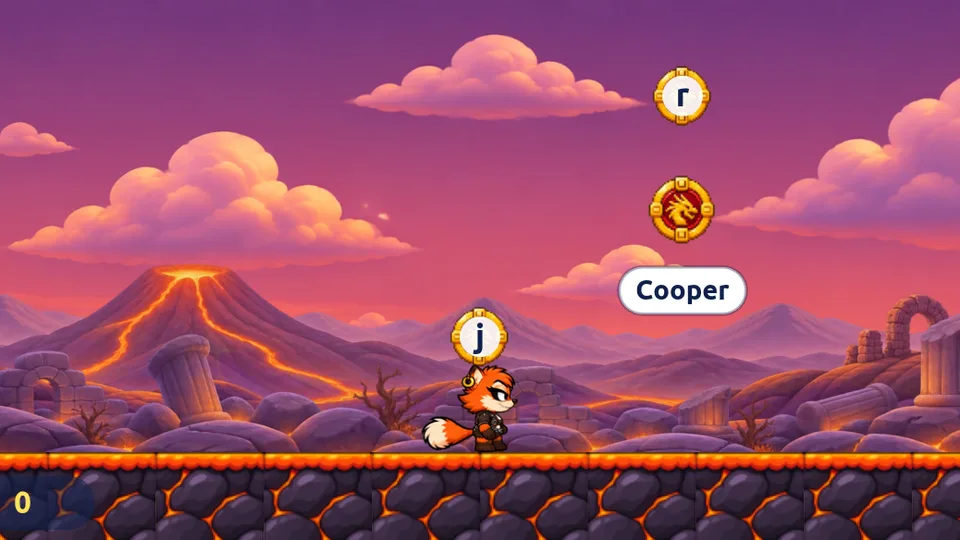 Letter rain
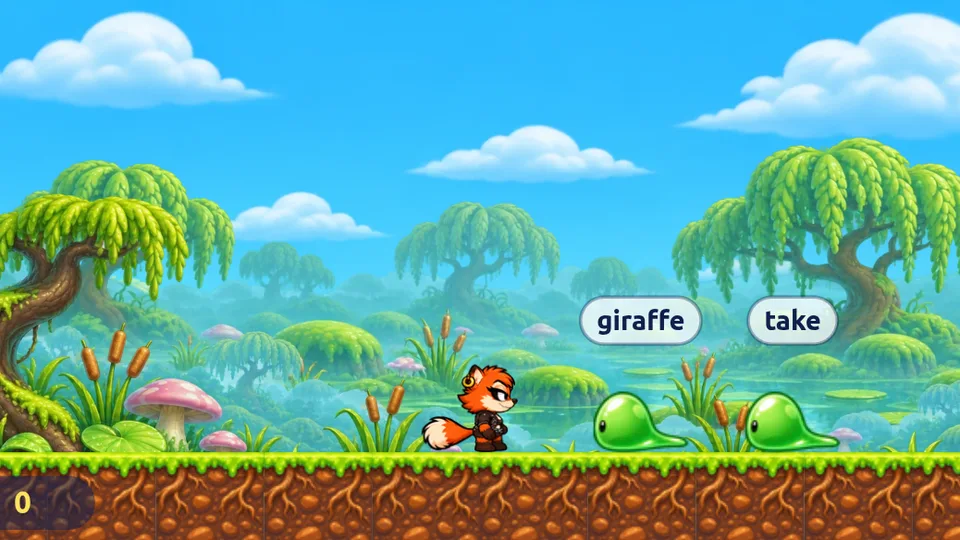 Stomp
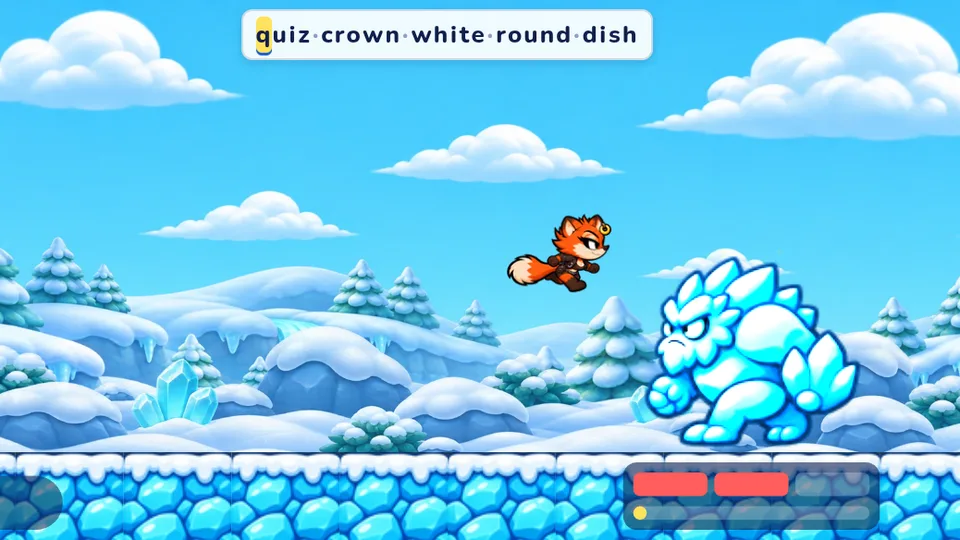 Boss fight

Real skills, wrapped in a game they want to finish.
Events, choices, loops and variables: the same ideas every coding language uses.
Splat Script helps teach typing skills. In Code view, kids type each line of a script, and a list offers ways to finish it.
Every script works as colored blocks or as typed code. Kids swap between the two whenever they like.
Each character already has a working script, so a first lesson can be changing one number.
When a line is wrong, the editor explains the mistake in words a child can read.
The Character scripting guide takes one idea at a time, from a first script to bosses and quests.
Every kid is different. Here’s a rough guide.
With a grown-up nearby: answer picture questions, pick a hero, and play a ready-made game. Then make small changes to games, like adding more coins and enemies.
Build a simple level on their own, from the start to the goal, and test it as they go. Then pick a biome and music, and share the game with friends by link.
Add enemies, checkpoints, locks and keys, and hidden levels. Then build bigger games with many levels, and try an Adventure with villagers and quests.
Write scripts that tell characters what to do, change gravity, and make their own characters. Then design boss fights and build quests with a story.

Straight answers, including the ones that aren’t “yes”.
No. The Character scripting guide explains each idea from the start, with examples to copy and change.
Your child can also ask Cooper, our chicken helper. Asking Cooper a question is always free.
No. Cooper Academy has step-by-step courses with quizzes, challenges and a progress page for you, but there are no grades or lesson plans.
It fits best as project work: take a course, or pick a topic from the guide, then build a game that uses it.
Most kids are ready for scripts at about 10 or 11. Blocks mean a keen younger child can try too.
Younger children still build whole games, because a game needs no script at all.
A computer with a web browser. A keyboard is needed for typing code.
A gamepad works for playing, but nobody needs one.
Yes. Cooper can answer questions, and can build or change a game when your child asks.
Cooper’s suggestion chips work without sending chat to OpenAI. Free-text messages are for registered accounts.
It is free to start, with no email address. Paid plans give you more child profiles, more games and more help from Cooper.